
Risk Factors Contributing to Substance Misuse in Young Adults
Several factors contribute to the high rates of substance use among youths aged 18-25 years. One significant factor is the developmental stage of emerging adulthood, which is characterized by exploration, experimentation, and a desire for independence. During this period, young adults are more likely to take risks, including experimenting with drugs and alcohol. The brain's prefrontal cortex, responsible for decision-making and impulse control, is still developing in this age group, making them more susceptible to engaging in risky behaviors without fully considering the consequences.
Social influences also play a crucial role in substance use among young adults. Peer pressure is a powerful factor, as individuals in this age group often seek acceptance and validation from their peers. In environments where substance use is normalized or even encouraged, young adults may feel compelled to participate in these behaviors to fit in. Additionally, the portrayal of substance use in media and popular culture can glamorize these behaviors, further contributing to their prevalence.
Mental health issues are another significant factor in substance use among young adults. The transition from adolescence to adulthood can be a challenging and stressful period, leading to feelings of anxiety, depression, and loneliness. Some individuals may turn to drugs and alcohol as a coping mechanism to alleviate these negative emotions. Unfortunately, substance use can exacerbate mental health issues, creating a vicious cycle that is difficult to break.
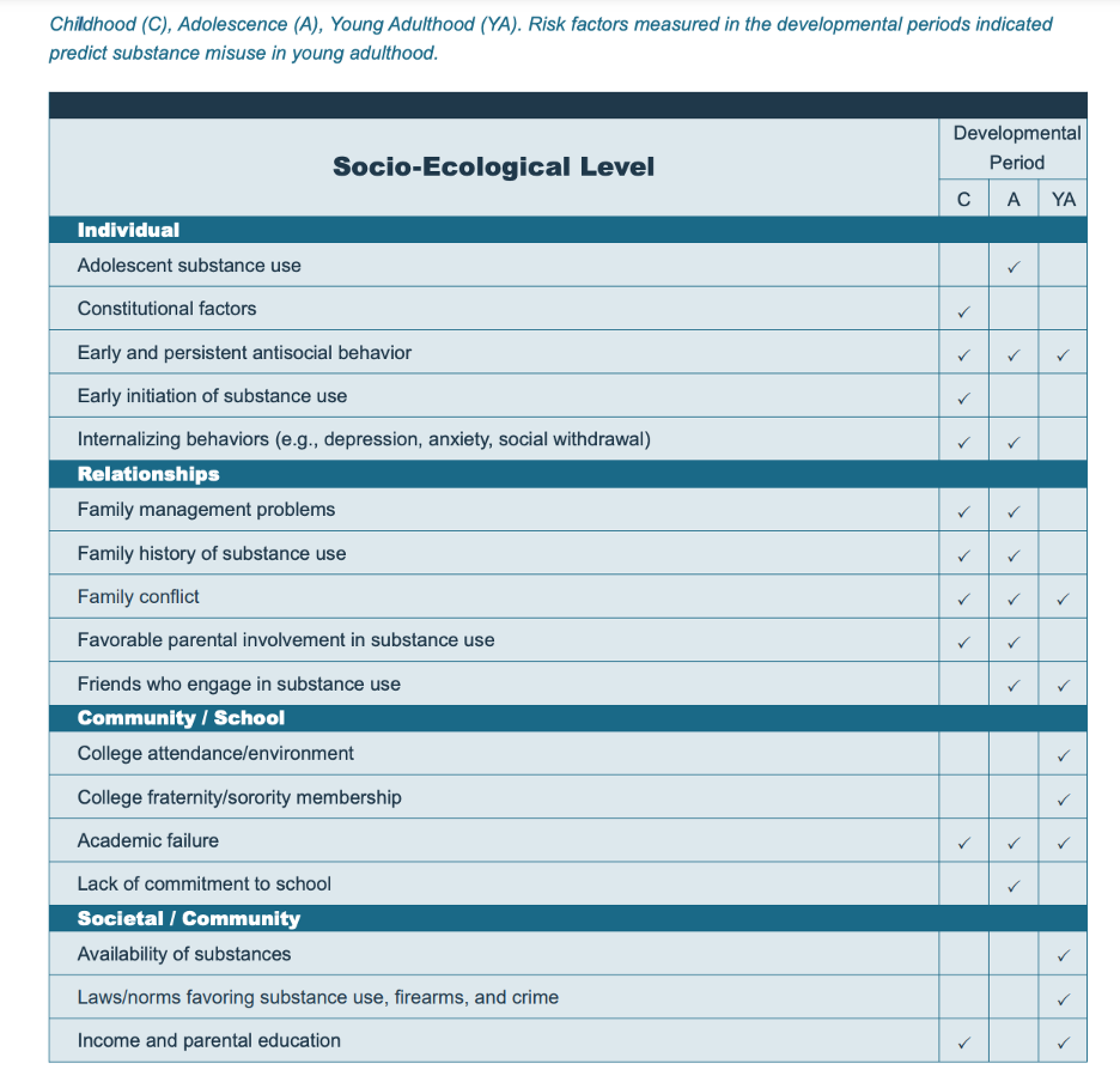
Classification of risk factors using a socio-ecological model
Source: https://store.samhsa.gov/sites/default/files/substance-misuse-prevention-pep19-pl-guide-1.pdf
Youth Perceptions of Substance Misuse
The attitudes and beliefs that young adults have about substance misuse depend on the substance and have changed over time. Perceptions of harm are especially important. A person’s belief that using substances will cause them harm together with their belief that abstaining or reducing their use will lead to improved health is thought to predict the extent of their substance use.
- Marijuana Use: Overall, people’s perception of marijuana harm has decreased as more states have legalized use of medical and recreational marijuana. Despite growing evidence about the negative effects of marijuana on maturing brains, 71 percent of young adults report they do not view regular marijuana use as very harmful. In 2017, the experimental use of marijuana was perceived to be risky by only about 7 to 10 percent of this population.
- Illicit Substance Use: Among young adults aged 19-30 years old, 46 to 50 percent believed the use of cocaine involved great risk, 71 to 74 percent believed the use of heroin involved great risk, and 44 to 48 percent believed the use of narcotics other than heroin involved great risk. In addition, among young adults, 30 to 41 percent of them saw a great risk in the experimental use of LSD.
- Alcohol Use: In 2017, 38 to 42 percent of young adults saw binge drinking or occasions of heavy drinking (having five or more drinks in a row) on weekends as dangerous. However, the perception that having one or two drinks per day is dangerous continues to be low.
- Tobacco Use: In 2017, 84 to 86 percent of young adults perceived regular pack-a-day cigarette smoking as a high-risk behavior. However, in recent years, 18-year-olds consistently showed lower perceived risk of cigarette smoking than other adults.
- E-Cigarettes: The most commonly cited reasons for using e-cigarettes among both adolescents and young adults are curiosity, flavoring/taste, and low perceived harm compared to other tobacco products. Unlike adults, adolescents and young adults do not report using e-cigarettes as an aid to quit conventional cigarettes.
Prescription Drug Misuse: Young adults are least concerned about the consequences of prescription drug misuse. They believe that these substances are generally used for legitimate purposes, and thus are not as harmful as other illicit substances.